
 426 views
ABOUT THIS CONTENT
A trend is a direction or a sequence of events which have some momentum and durability.Table of Contents
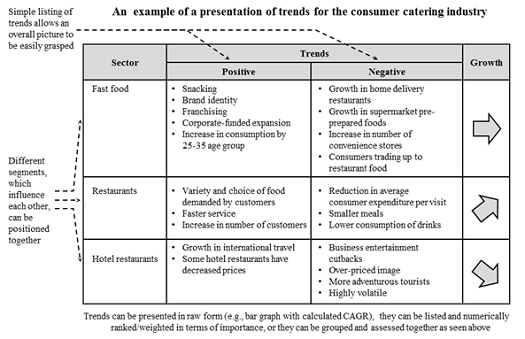
A trend is a direction or a sequence of events which have some momentum and durability. A trend is not a fad, forecast, or a prediction, but a stable movement that is gradual in progression. Trends can be grouped into six macro-environmental forces: political, economic, cultural, demographic, natural, technological.
Methodology
- Define the industry and the company objective. Refer to issue analysis. Determine industry boundaries and how they have changed.
- Identify trends of relevance. Locate trends within the industry or external ones that may impact it. Determine magnitude and duration of trends.
- Assess significance of trends. Assess and rank importance of trends with respect to the company and its competitors. Analyze threats and opportunities.
Notes
- Fads should not be mistaken for trends
- Trends should not be confused with prospects or with speculation about the future
- Most trends have generally been identified by experts—it is the manager’s job to uncover the ones of greatest relevance to the company
- Remember that trends are movements already under way that have momentum
Strengths
- Forces strategists to look ahead in formulating strategy
- Little analysis is required, mostly research intensive
Weaknesses
- Does not convey information that could warn of future “shocks” or sudden strange occurrences
- Requires much education to comprehend implications of trends
There Are No Comments
Click to Add the First »
Click to Add the First »